Unallocated Metal Accounts in Ukraine 2026: Pros, Cons & Real Numbers
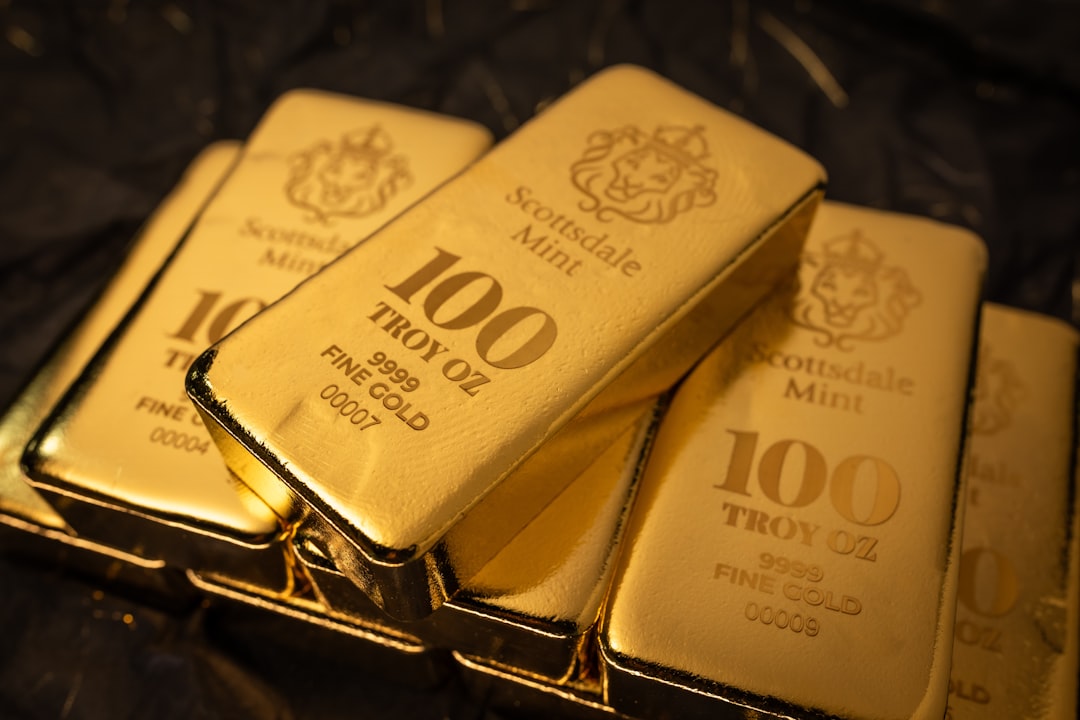
Gold hit $2,700 per ounce in January 2026 — and Ukrainian investors are Googling “metal account pros and cons” again. No surprise: the hryvnia (Ukraine’s national currency) remains under pressure, bank deposits barely keep pace with inflation, and storing a gold bar in a home safe isn’t for everyone. But unallocated metal accounts come with real strings attached — ones your bank manager probably won’t volunteer.
A UMA isn’t a deposit in any conventional sense. The bank doesn’t store your gold bar with your name on it. It records how many grams you’ve purchased and commits to buying them back at the prevailing market price. The product operates under an NBU banking metals licence and is available at a handful of banks — both state-owned and private.
# How a metal account works
The mechanics are simple. You transfer hryvnias; the bank converts them into grams of metal at its current buy rate. When you want out, the bank repurchases those grams at its sell rate. The gap between the two rates is the spread — effectively the bank’s commission.
There’s no physical metal. That’s worth internalising upfront. You own a ledger entry — much like electronic money. The bank deploys your funds in its own operations and “backs” your position according to internal rules.
Depending on the bank, you can open an account online or at a branch. Minimum entry starts at 0.1 g of gold at some institutions. Transactions go through on business days when prices are active. On weekends, quotes are frozen — that’s the first quirk to factor in.
# Pros of a metal account — why investors actually like them
Low entry point. Physical gold bullion starts at 1 g — already $100+. With a UMA you can start with a fraction of a gram, literally UAH 300–500 (around $7–12).
Zero storage headaches. No safe, no insurance policy, no customs questions. The metal “exists” in the bank’s registry.
Pegged to global prices. Your asset is effectively denominated in US dollars — a move in gold on the London Bullion Market flows directly into your account’s value. That’s a meaningful hedge against hryvnia devaluation, which is very much a live concern.
More liquid than physical bars. Selling physical gold in wartime Ukraine is a quest. With a UMA, you simply instruct the bank to buy back your grams. The proceeds land in your current account.
No VAT on purchase. Unlike physical bullion bars, UMA transactions carry no VAT. That’s a real saving — 20% is not a rounding error.
But this isn’t a miracle instrument. Here’s the uncomfortable side.
# Cons and risks — what banks don’t tell you upfront
The spread is the first thing that deserves a frank conversation. The buy/sell gap at Ukrainian banks runs 2–8%. That means you’re already down that amount the moment you open. Gold needs to rise at least 5% before you’re back to zero.
And then there’s the headline risk: no Deposit Guarantee Fund coverage. Standard bank deposits in Ukraine are state-insured up to UAH 600,000 (roughly $14,300). UMAs are not. At all. If the bank collapses, you join the creditor queue. That’s not theoretical — Ukraine has weathered multiple waves of bank failures. Choosing the right bank for a UMA matters more than it does for a deposit.
No interest income. Unlike a deposit, a UMA accrues no interest. Your only return is price appreciation. If gold flatlines for a year, you’ve earned nothing — while inflation still erodes your purchasing power.
Tax on exit. 18% personal income tax plus 1.5% war surcharge — nearly 20% of your profit. More on that below.
And one more: during wartime, Ukrainian banks can restrict metal account operations — de facto, without notice. It’s an operational risk, and it’s real.
# Where to open a UMA in Ukraine in 2026
Honest market picture: not every NBU-licensed bank actively offers UMAs to retail clients.
Oschadbank — Ukraine’s state savings bank — is the most straightforward choice for a conservative investor. It works with gold, silver, platinum, and palladium. Physical bar delivery is possible — with an additional refining charge and 20% VAT. Spread on gold runs around 3–5%.
Ukrgasbank — another state-owned bank with a banking metals licence. Terms are broadly similar to Oschadbank; check current rates on their website or in branch.
NBU-licensed private banks — the picture is fluid. A number of banks that offered UMAs before 2022 have suspended the product. Verify availability on the specific bank’s website before making any plans.
What to check before you open:
- Active NBU licence for banking metals operations
- Gold spread (ask to see live buy and sell quotes side by side)
- Exit terms — cash redemption only, or bar delivery available
- Online account access to monitor prices in real time
Frankly, in 2026 the choice for Ukrainian investors is narrow. State banks are the most predictable option — even if their spreads aren’t the tightest.
# How much can you earn: real numbers
Let’s do the arithmetic. Say you opened a gold UMA in January 2023, when the price was around $1,850 per ounce. By January 2026 it’s $2,700 — a gain of roughly 46% in dollar terms.
But you bought and sell in hryvnias. The hryvnia also depreciated over that period — from roughly UAH 40/$ to UAH 42/$ (simplified). So your hryvnia gain is actually higher than the dollar gain.
Now subtract: 5% spread on entry, 5% on exit — 10% total. Then subtract 19.5% tax on profit (personal income tax + war surcharge). What remains is still a respectable real return, but it’s not 46%.
So what happens with a short horizon? If you’re in for a year or less, your chances of coming out ahead drop sharply. The spread and taxes consume moderate price gains. A UMA works over 2–3+ years. Don’t treat it as a trading vehicle.
# UMA taxes in Ukraine — how to avoid a nasty surprise
Most investors ignore UMA taxation until the moment they sell. Don’t.
The mechanics: when the bank buys back your metal, it withholds tax as your fiscal agent. You don’t need to file a separate declaration — the bank handles it. But the deduction can catch you off-guard.
18% personal income tax applies to the difference between your sale price and your purchase price. Add 1.5% war surcharge (in force during martial law). Total: 19.5% of your profit.
One important detail: if you bought metal in multiple tranches at different times, the bank applies either FIFO (first in, first out) or an average cost method — check with your specific bank, because it affects your taxable base.
Also: mark-to-market revaluation as prices move is not a taxable event. Tax only triggers when you close the position. That incentivises holding longer — which, frankly, is the right strategy for this instrument anyway.
# UMA vs physical gold vs ETF — what should you choose?
Three paths, three distinct profiles. There’s no universal answer.
| Parameter | UMA | Physical gold | Gold ETF |
|---|---|---|---|
| Minimum entry | From 0.1 g | From 1 g (bar) | From $1 (fractional shares) |
| Storage | Bank | Safe / safety-deposit box | None |
| VAT on purchase | None | 20% (bars) | None |
| Liquidity | Medium | Low | High |
| Guarantee | None (not DGF) | None (physical asset) | None (market risk) |
| Availability in Ukraine | Limited | Yes, but cumbersome | Very limited |
| Spread / fee | 2–8% | 5–15% | 0.1–0.5% / year |
Gold ETFs are the most cost-efficient vehicle by total ownership cost. But in Ukraine in 2026, regulatory access to Western exchanges is restricted for most retail investors. Physical gold offers maximum tangibility — but low liquidity and VAT kill returns on amounts below $10,000. A UMA is a reasonable compromise for the Ukrainian market with a 3+ year horizon.
# When a metal account is the wrong choice
A UMA isn’t right for everyone, or for every situation. Here are specific cases where you should pass.
Horizon under one year. Spread plus profit tax means gold needs to climb at least 10–12% for you to break even. It may not get there in 12 months.
You need liquidity. If those funds might be needed at short notice, a UMA is a poor fit. Emergency selling at the bank’s sell rate at the wrong moment means a loss.
Small amounts — under UAH 10,000 (roughly $240). The spread makes the exercise nearly pointless from a return standpoint at small sizes. A high-yield savings account makes more sense for that kind of money.
A bank with questionable capital. The DGF doesn’t cover UMAs. Opening a metal account at a bank sitting near the bottom of the NBU’s stability ratings is a gamble, not an investment.
A UMA in Ukraine in 2026 is a niche but functional tool for a conservative investor with a 2–3 year minimum horizon. It’s not a cure-all. It’s not a deposit substitute. And it’s not a way to get rich quickly off gold’s run. But it is a clear, accessible, and relatively dependable way to protect part of your capital from inflation and currency depreciation — provided you pick the right bank and model out all the costs before you commit.
The one rule that matters: calculate the spread, the tax, and your horizon before you open — not after.
Subscribe to Kompanion to catch our next deep-dives into investment instruments for the Ukrainian market — no fluff, no marketing brochures.
Часто задаваемые вопросы
Are metal accounts insured in Ukraine?
No. UMA balances fall outside Ukraine's Deposit Guarantee Fund (DGF) protection. If the bank fails, you become a creditor — you don't receive a payout from any guarantee fund. That makes bank selection far more critical for a UMA than for a standard deposit. Look at capital adequacy, NBU ratings, and state ownership stake.
Can you withdraw physical metal from a UMA?
Technically yes, but in practice most Ukrainian banks only offer cash redemption — no bar delivery. Oschadbank (Ukraine's state savings bank) can issue physical gold, but charges a premium for refining plus 20% VAT. In most cases, converting to a physical bar is economically unviable.
How is UMA income calculated?
Say you bought 10 g of gold at UAH 3,200/g and sold at UAH 3,800/g. Your profit is UAH 6,000 ($150). The bank withholds 18% personal income tax plus 1.5% war surcharge on that amount. Mark-to-market revaluation isn't a taxable event — tax triggers only when you close the position, which incentivises holding long-term.
Which metal makes most sense to open in 2026?
Gold remains the most liquid with the tightest spreads. Silver showed volatile gains in 2024–2025, but Ukrainian banks charge higher spreads on it. Platinum and palladium are niche instruments driven by industrial demand cycles. For a conservative investor, gold — full stop.
Does a UMA make sense during wartime?
Yes, if your investment horizon is 2–3 years and you don't need liquidity within a few months. Gold historically rises during geopolitical stress: from February 2022 to January 2026, the price per ounce climbed from roughly $1,900 to $2,700. But the bank's spread is your opening loss — you need price appreciation just to break even.